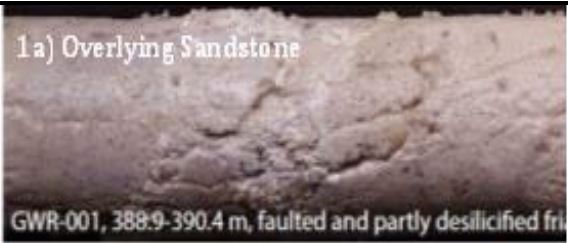
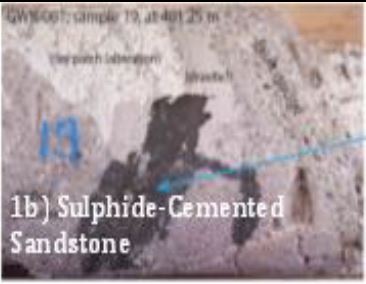
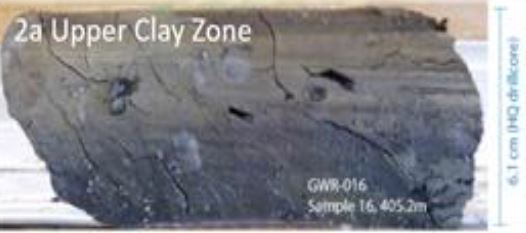
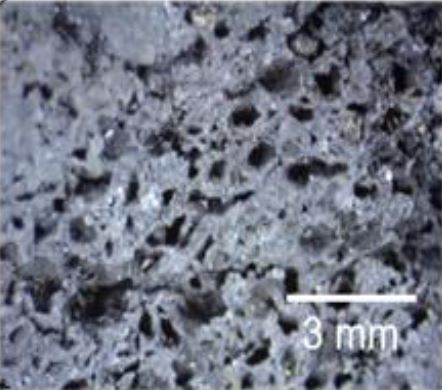
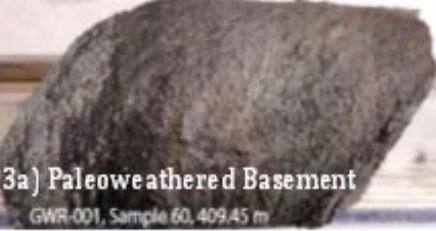
The Phoenix deposit is a classic example of an unconformity‑related uranium system within the
Athabasca Basin. The geological sequence transitions from clean sandstone into progressively stronger
clay alteration near the unconformity, followed by friable high‑grade mineralized zones and finally
into paleoweathered and competent basement rocks.
These changes in lithology and alteration reflect the interaction of oxidized basin fluids with
reducing basement structures, creating the redox gradients and permeability pathways that control
uranium deposition. The units shown above represent the key hydrogeological domains typically logged
in Phoenix‑style systems and form the basis for the interpretation demonstrated in this project.